
Inspection Checklist After Applying Thermal Shield RF (Roof) on Ras Al Khaimah Construction Sites
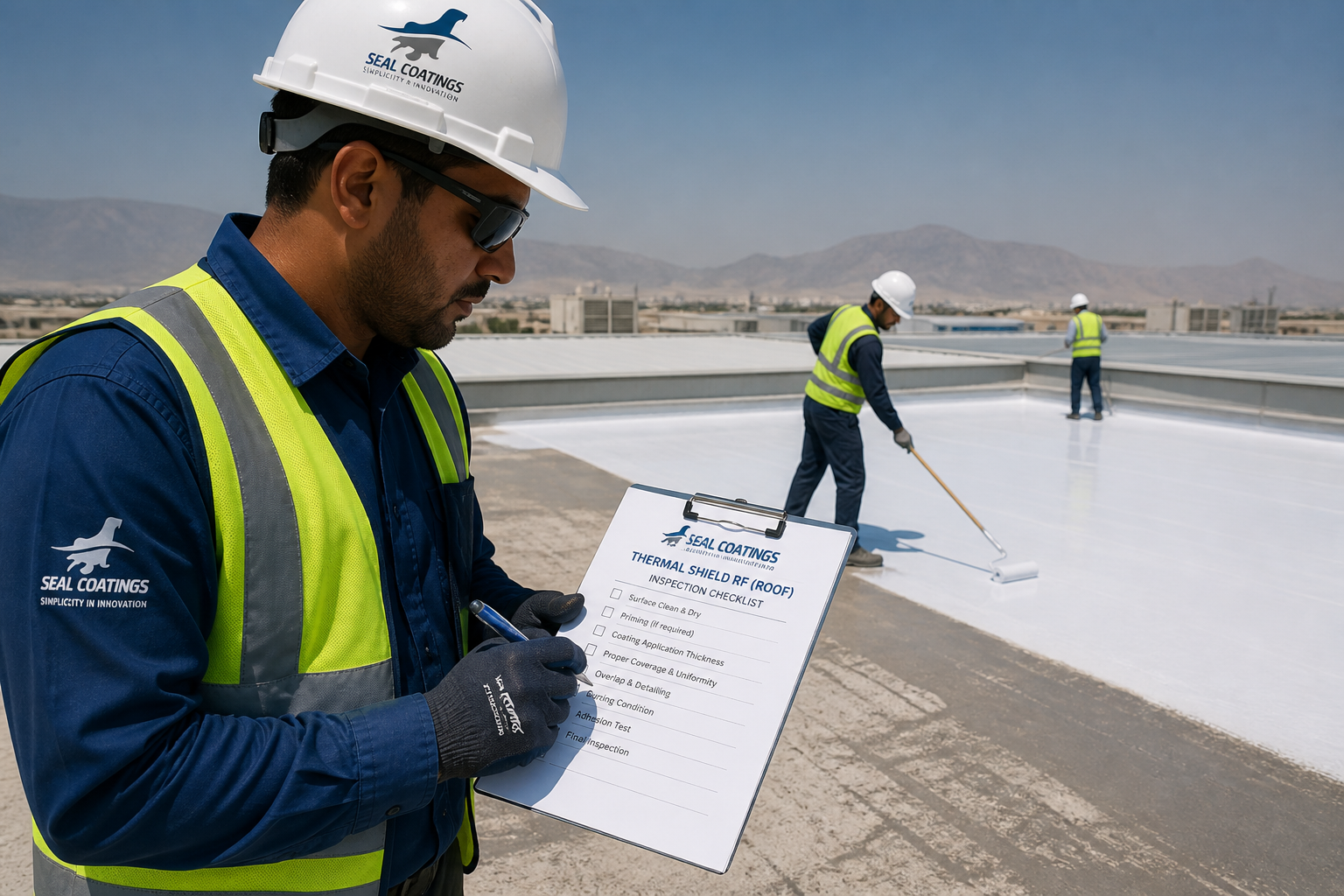
Ensure quality application and performance with our comprehensive checklist for inspecting Thermal Shield RF on Ras Al Khaimah roofs.
Thermal insulation is vital for construction projects in the UAE, particularly in regions like Ras Al Khaimah where extreme temperatures are common. Applying Seal Coatings' Thermal Shield RF (Roof) offers an efficient solution to improve energy efficiency and comfort in buildings. However, ensuring its optimal performance requires a detailed inspection process after application. Below, we provide a comprehensive checklist designed specifically for professionals tasked with evaluating Thermal Shield RF installations on construction sites in Ras Al Khaimah. Pre-Inspection Preparations Before beginning the inspection, ensure that all safety protocols are in place and necessary equipment is available. This includes personal protective equipment (PPE) and tools for measuring and testing the coating's integrity. Confirm the application is complete and set according to manufacturer’s guidelines. Verify safety protocols are being followed on-site. Gather required inspection tools such as moisture meters, thermal cameras, and thickness gauges. Physical Condition Assessment A visual inspection of the coating is a critical step in evaluating its application quality and durability. This helps identify any immediate issues that may affect its thermal performance. Inspect for uniform coverage and thickness of the coating. Check for any signs of peeling, blistering, or cracking. Look for consistent coloration across all coated surfaces. Assess adherence to substrates, especially at joints and edges. Thermal Performance Testing Once the physical condition has been evaluated, the next step is to test the thermal insulation performance. This is crucial in a cooling-demand region like Ras Al Khaimah. Use a thermal camera to assess heat distribution and insulation effectiveness. Measure surface temperature before and after exposure to sunlight. Compare interior temperature stability to expected performance benchmarks. Moisture Resistance Check Thermal Shield RF also serves as a robust waterproofing solution, so assessing its moisture resistance is essential. Utilize a moisture meter to check for water infiltration beneath the coating. Inspect drainage systems on roofs for any potential blockages or leaks. Ensure water does not pond on the roof surface. Documenting and Reporting Thorough documentation helps support ongoing performance verification and maintenance planning. Accurate records are essential for ensuring long-term efficiency. Document all findings with detailed notes and photographic evidence. Provide a comprehensive report that includes room for future inspections. Offer recommendations for remedial action if issues are discovered. Conclusion Ensuring Thermal Shield RF is correctly applied and functioning effectively on Ras Al Khaimah construction sites is crucial for maximizing energy efficiency and water resistance. By following this comprehensive inspection checklist, construction professionals, engineers, and architects can safeguard their projects against potential inefficiencies or failures, ensuring optimal performance and investment protection. For more information about our products and services, reach out to Seal Coatings, the leader in innovative roof solutions in the GCC.